


Back to Search Results

HYUNDAI, Kona Electric (Latest Model)

Rating 4

4

At a Glance

Price New
£35,000 - £41,890
Insurance Group
31 - 33
Fuel Type
Electric
Range
282 Miles - 319 Miles
Engine Power
214 bhp
Number of Doors
5
Recommended Trim Level
Kona Electric 65kWh Premium

Why it's great

Pro
Strong real-world range in a compact, manageable SUV
Pro
Comfortable, composed ride even on poor roads
Pro
Sensible pricing with generous standard equipment

What could be better

Con
Interior design favours function over visual drama
Con
Rear seat space still trails some newer rivals
Con
Driving experience prioritises calm over engagement

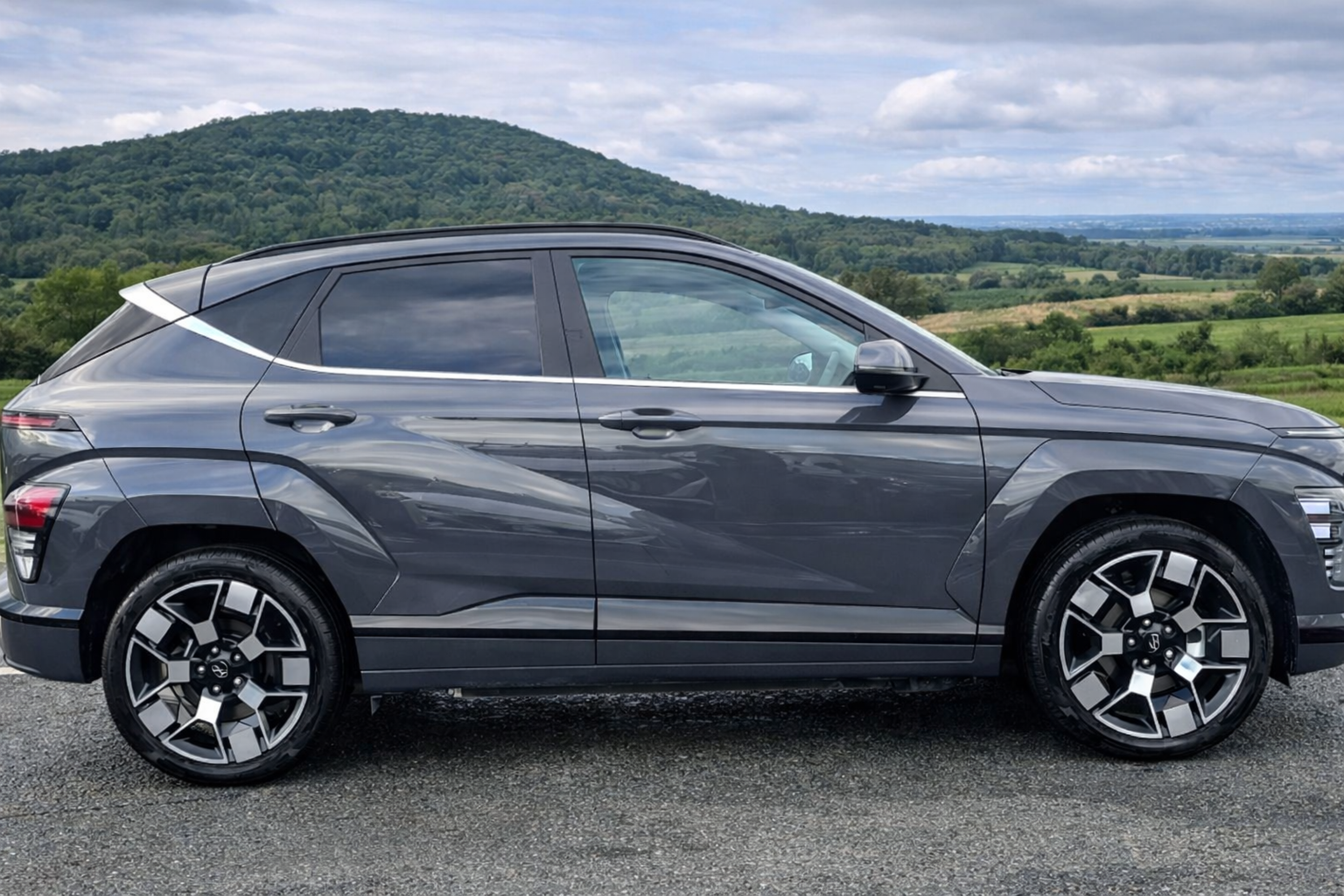
The Hyundai Kona Electric has always been an EV that earns respect quietly. Long before electric cars became fashionable, it was already delivering usable range, predictable ownership costs and a size that made sense for real-world driving. When Hyundai introduced the second generation Kona Electric in 2023, it didn’t attempt to reinvent the car’s role. Instead, it refined it, smoothing out rough edges, adding space where it mattered and modernising the design without losing the Kona’s approachable nature.

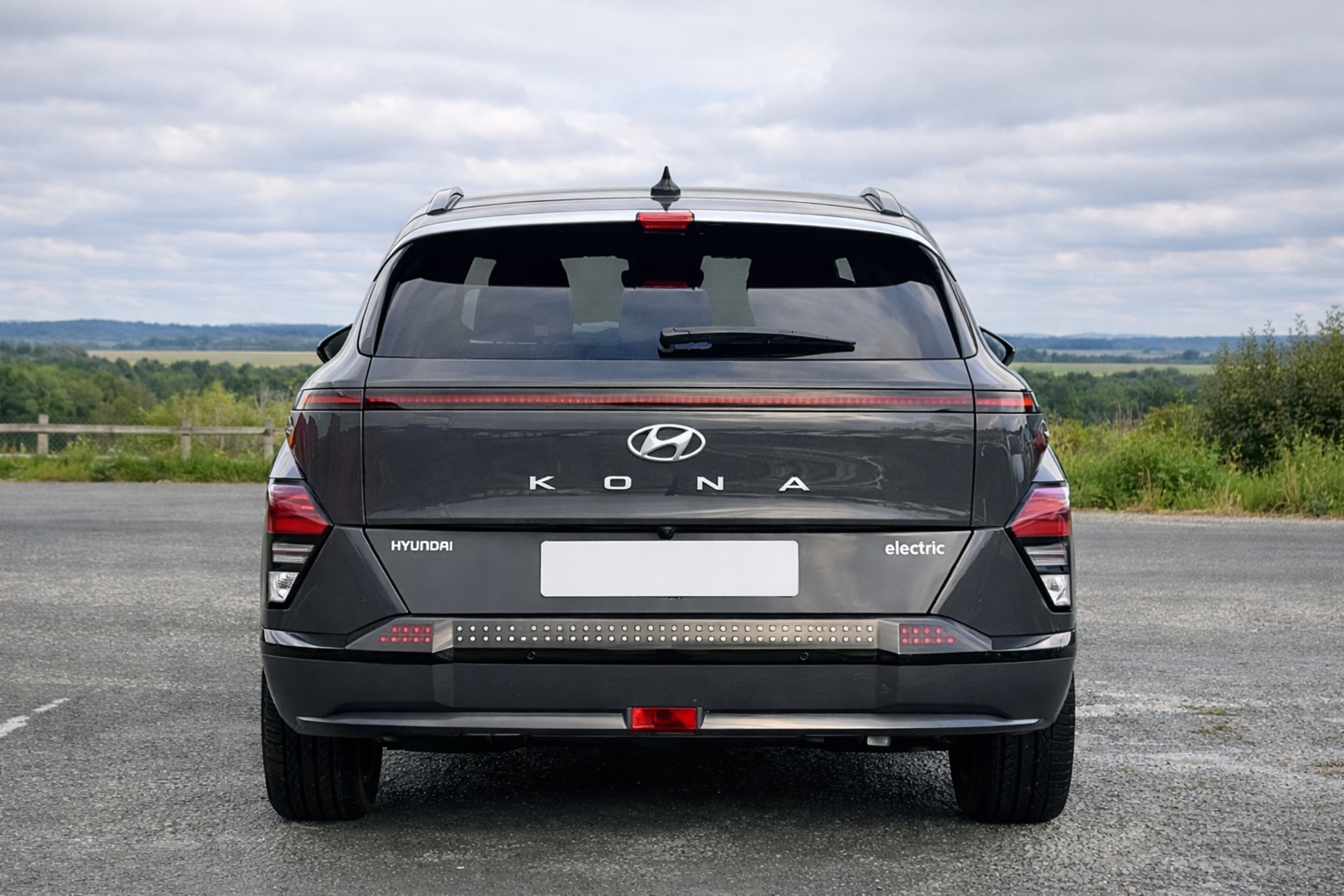
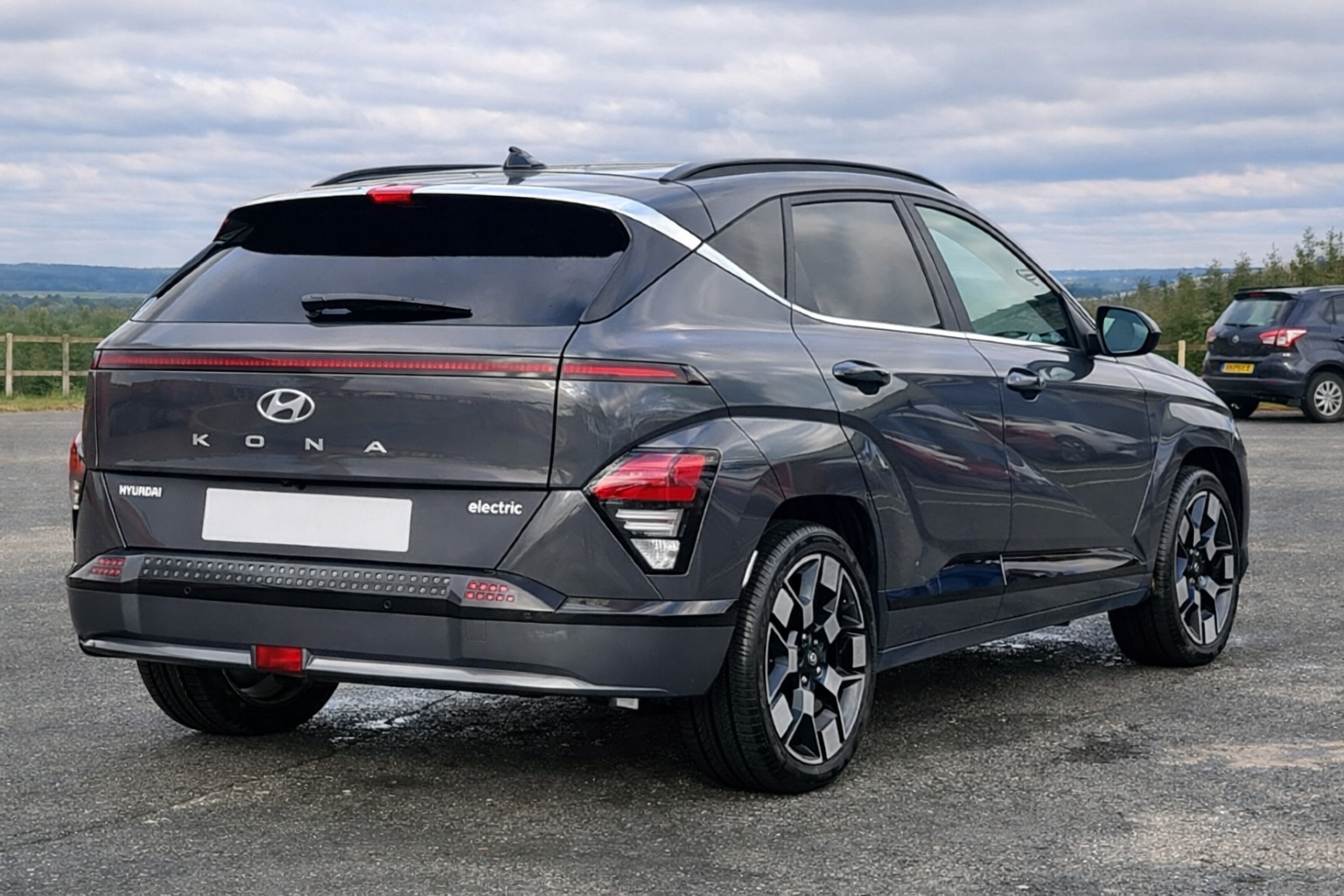
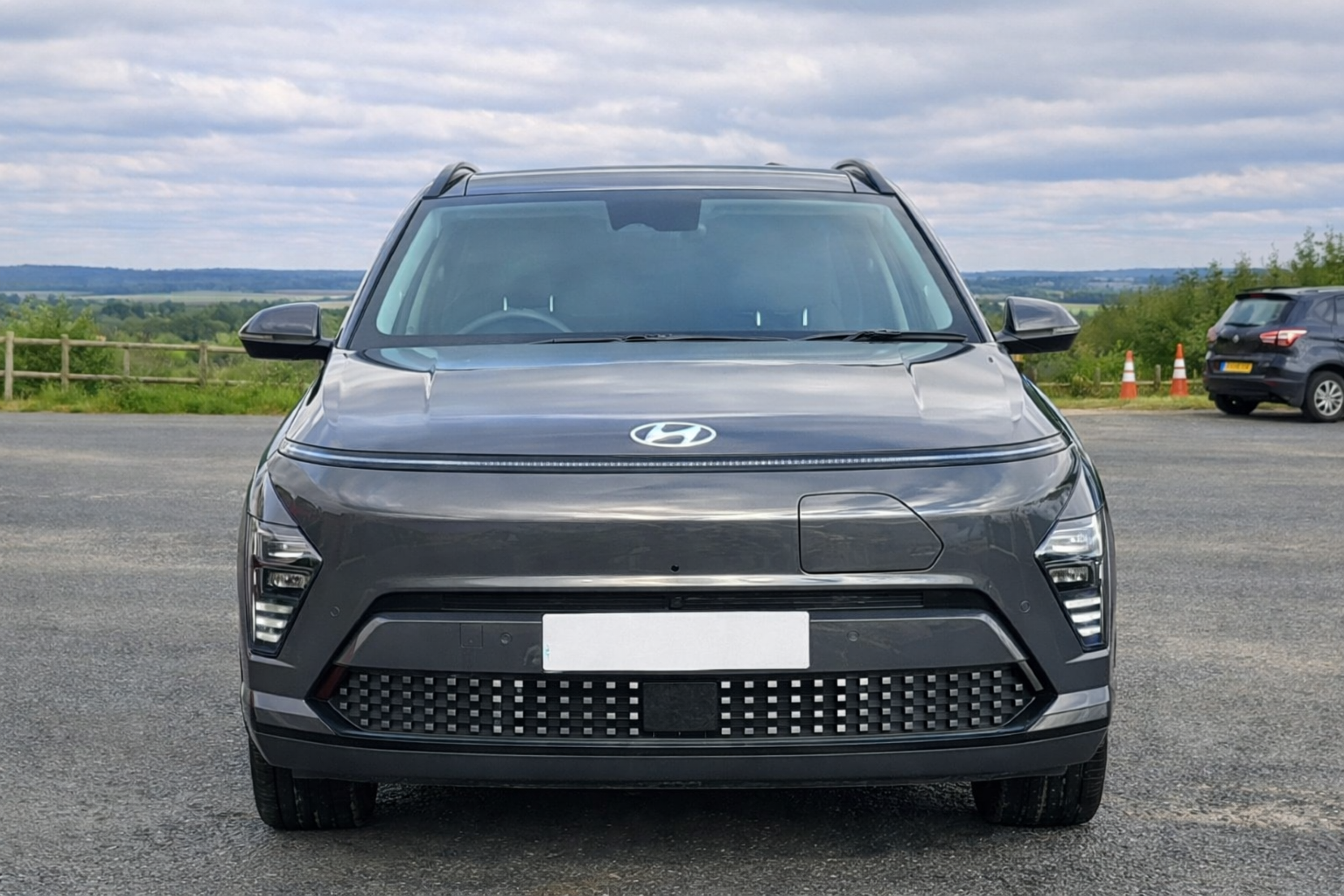
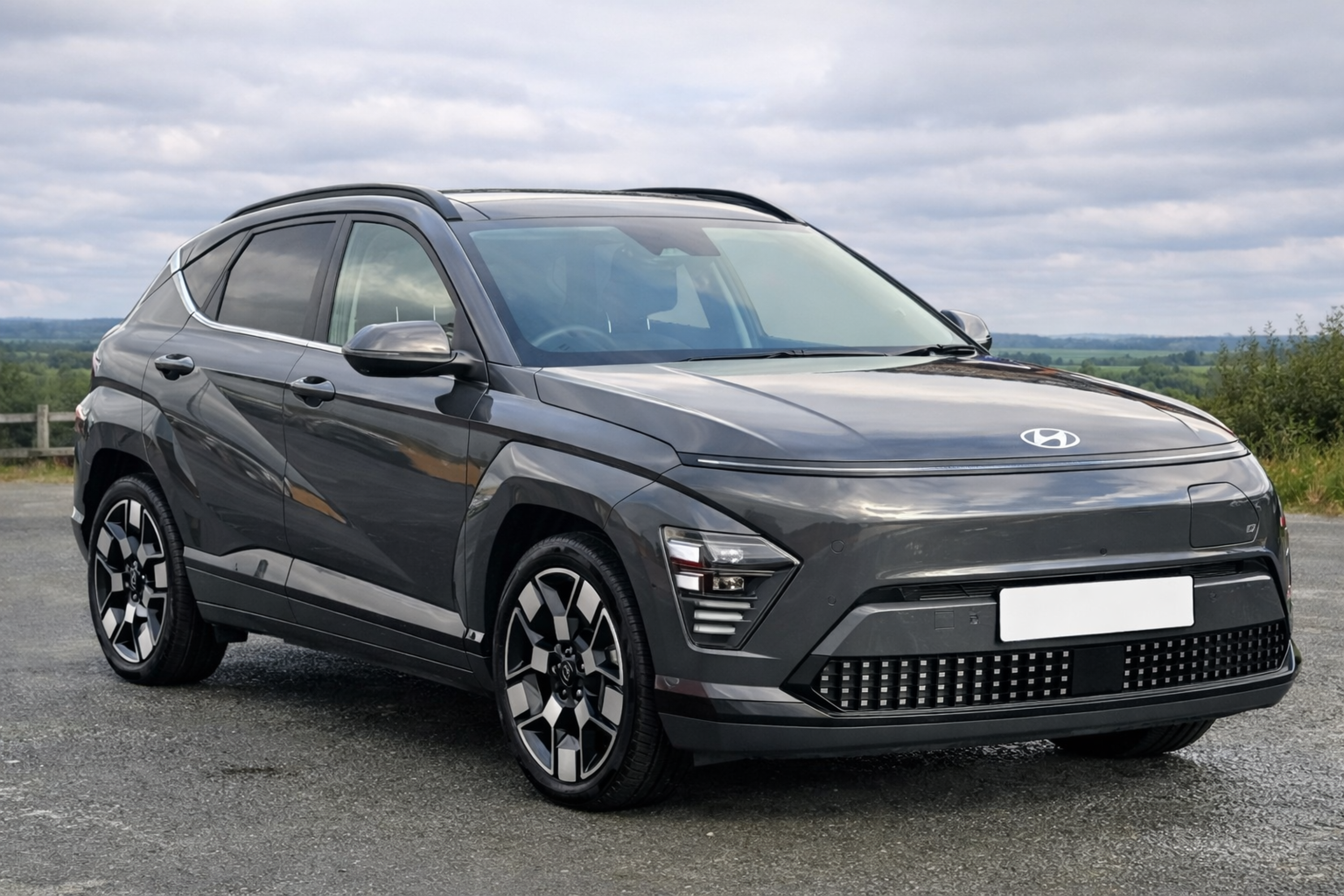
This latest Kona Electric feels more confident in its identity. It no longer looks like a conventional hatchback that’s been lightly reworked for electric duty. Instead, it feels like a well thought out compact SUV, designed from the outset to accommodate electric hardware and everyday life in equal measure.

What makes the Kona Electric stand out today is not novelty but maturity. It’s a car that feels settled, predictable and easy to live with, qualities that often matter far more after six months of ownership than they do during a short test drive.

Check Your Vehicle

Get a Complete Car History Check You Can Trust

We check more! Our reports contain over 85 data points so you get complete peace of mind.

Enter your vehicle registration number

UK

Prices, Engines & Trim Levels

In the UK market, the Hyundai Kona Electric occupies a sensible middle ground between entry level electric crossovers and premium branded EVs. As of 2025, brand new Kona Electric models typically start at around £34,000, with higher specifications rising to £41,000–£42,000.

Two main battery variants define the range. The entry level model uses a 48.6kWh battery, aimed at drivers whose use is largely urban or suburban. This version focuses on affordability and efficiency, offering enough range for daily driving without inflating the price through unused capacity.

The more versatile and popular option is the 65kWh Kona Electric, which delivers significantly stronger long distance capability. Prices for this version usually begin in the high £30,000s and it’s the variant that best suits mixed driving, including regular motorway journeys. It’s the Kona Electric that feels most flexible and future proof.

Trim levels are clearly differentiated. Advance models already include dual digital displays, adaptive cruise control, lane assistance, rear parking sensors and climate control. Premium trims add features that noticeably improve daily comfort, including heated seats and steering wheel, larger alloy wheels, upgraded interior materials and additional driver assistance systems. At the top sits Ultimate, which introduces leather upholstery, a premium audio system, enhanced safety features and styling details that push the Kona closer to premium territory.

Crucially, Hyundai avoids making lower trims feel bare. Even entry versions retain the Kona’s core technology and safety credentials, meaning buyers aren’t forced into higher trims simply to get essential features.

Interior

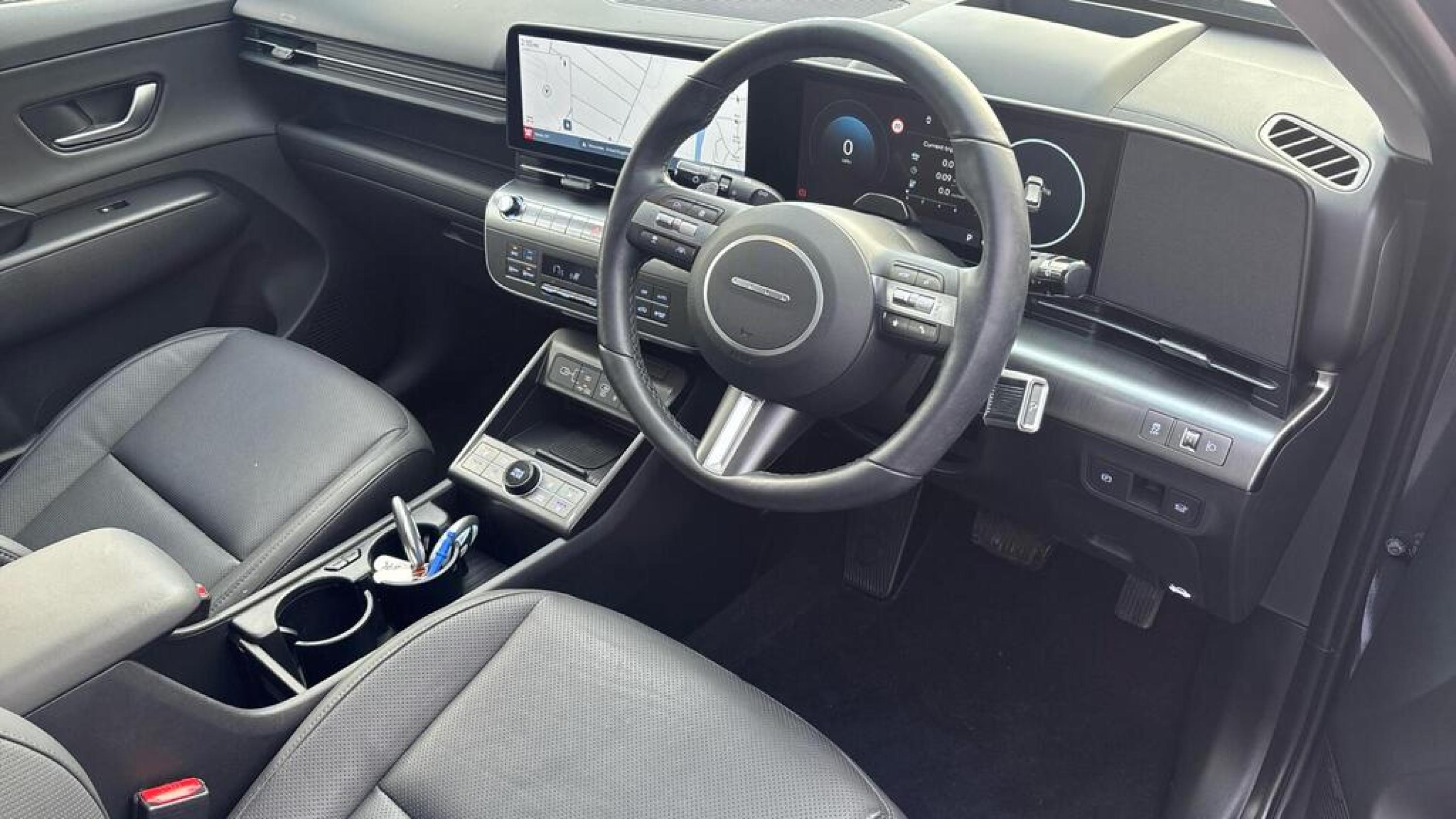
The interior of the second generation Kona Electric is designed around clarity rather than spectacle. The dashboard layout is clean and horizontal, giving the cabin a sense of width and order. It doesn’t aim to overwhelm or impress at first glance; instead, it focuses on making everyday interactions simple and intuitive.

Digital displays are sharp and easy to read, with information presented logically rather than scattered across multiple menus. The infotainment system is responsive and well structured, allowing drivers to access navigation, media and vehicle settings without excessive scrolling. Importantly, Hyundai has retained physical controls for key functions such as climate and audio, which significantly improves usability while driving.

Material quality is reassuring rather than luxurious. Soft touch surfaces are used where it matters most, while harder plastics are confined to lower areas. Everything feels solidly assembled, with no obvious cost cutting throughout the interior. The overall impression is of durability, an interior designed to withstand years of daily use rather than impress in a showroom.

The front seats are comfortable and supportive, particularly on longer journeys. The driving position offers good visibility, aided by relatively slim pillars and a commanding yet not overly high seating position. Controls are within easy reach and the cabin feels well thought out rather than experimental.

Rear passenger space has improved over the previous generation but the Kona Electric still prioritises front seat comfort. Adults fit comfortably for shorter trips, though legroom is more limited than in larger EV SUVs. Headroom is good thanks to the upright roofline, preventing the rear from feeling cramped despite the Kona’s compact footprint.

Technology is integrated in a way that supports rather than dominates the experience. Driver assistance features operate quietly in the background and the cabin avoids the sense of digital overload that affects some newer EVs.

Driving Experience

From behind the wheel, the Kona Electric immediately feels easy to drive. Acceleration is smooth and predictable, making stop-start traffic less tiring and junctions less stressful. The electric motor delivers power progressively, avoiding the abrupt surges that can make some EVs feel awkward at low speeds.

Steering is light but accurate, well suited to urban environments where ease of manoeuvring matters more than feedback. The Kona’s compact dimensions make it easy to place on narrow roads, while the low mounted battery helps keep body movements controlled through corners.

Ride comfort is one of the Kona Electric’s strongest attributes. The suspension absorbs bumps and broken surfaces with composure, preventing the jittery ride that affects some compact EVs. On motorways, the Kona settles into a relaxed cruise, with wind and road noise well suppressed.

Handling is secure rather than entertaining. The Kona Electric doesn’t encourage spirited driving but it remains stable and confidence-inspiring when the road becomes more demanding. Grip levels are more than adequate and braking performance is smooth and predictable.

Overall, the driving experience prioritises reducing effort rather than delivering excitement, a philosophy that aligns well with the Kona Electric’s intended role as an everyday EV.

Running Costs

Running costs are one of the areas where the latest generation Kona Electric most clearly demonstrates how far it has come since the original model. Hyundai’s focus with the 2023-on car wasn’t just increasing headline range figures but making that range more usable and predictable in real-world conditions, particularly on mixed UK driving.

In everyday use, the 65kWh Kona Electric typically delivers a real-world range in the region of 260 to 300 miles, depending on driving style, weather and road type. Around town and on slower A-roads, it’s not difficult to see figures toward the upper end of that scale, thanks to strong regenerative braking and efficient low speed energy use. Motorway driving naturally pulls range down but even at sustained higher speeds the Kona remains consistent rather than erratic, which helps reduce planning anxiety on longer journeys.

The smaller battery version offers less outright range but for drivers with shorter daily routines it still covers typical commuting distances comfortably without needing frequent charging. Importantly, neither version feels overly sensitive to temperature changes; cold weather efficiency drops are noticeable but manageable, rather than dramatic.

Charging performance is competitive for the class, though not class-leading. On a rapid DC charger, the Kona Electric supports charging speeds of up to around 100kW, allowing a 10–80% charge in roughly 40–45 minutes under ideal conditions. That makes motorway stops perfectly workable, even if it doesn’t quite match the fastest charging rivals.

At home, using a 7kW wall box, a full overnight charge takes approximately 9 to 10 hours for the larger battery, meaning most owners can start each day with a full charge without altering their routine. The Kona’s charging behaviour is predictable and stable, avoiding the steep drop off in charging speed that can frustrate owners of some older EVs.

From a cost perspective, the Kona Electric remains very economical. Drivers charging primarily at home, especially on off-peak tariffs, will see running costs that are significantly lower than equivalent petrol or diesel SUVs. The electric drivetrain also reduces maintenance expenses, with no oil changes and reduced brake wear thanks to regenerative braking.

Overall, the Kona Electric’s combination of dependable real-world range and straightforward charging makes it easy to live with. It may not chase charging records but it delivers something arguably more valuable: consistency. You quickly learn what it can do, and it does that reliably day after day.

Practicality & Size

The Hyundai Kona Electric balances compact exterior dimensions with genuinely useful interior space. Measuring just over 4.3 metres in length, it remains easy to manoeuvre and park while offering SUV-style practicality.

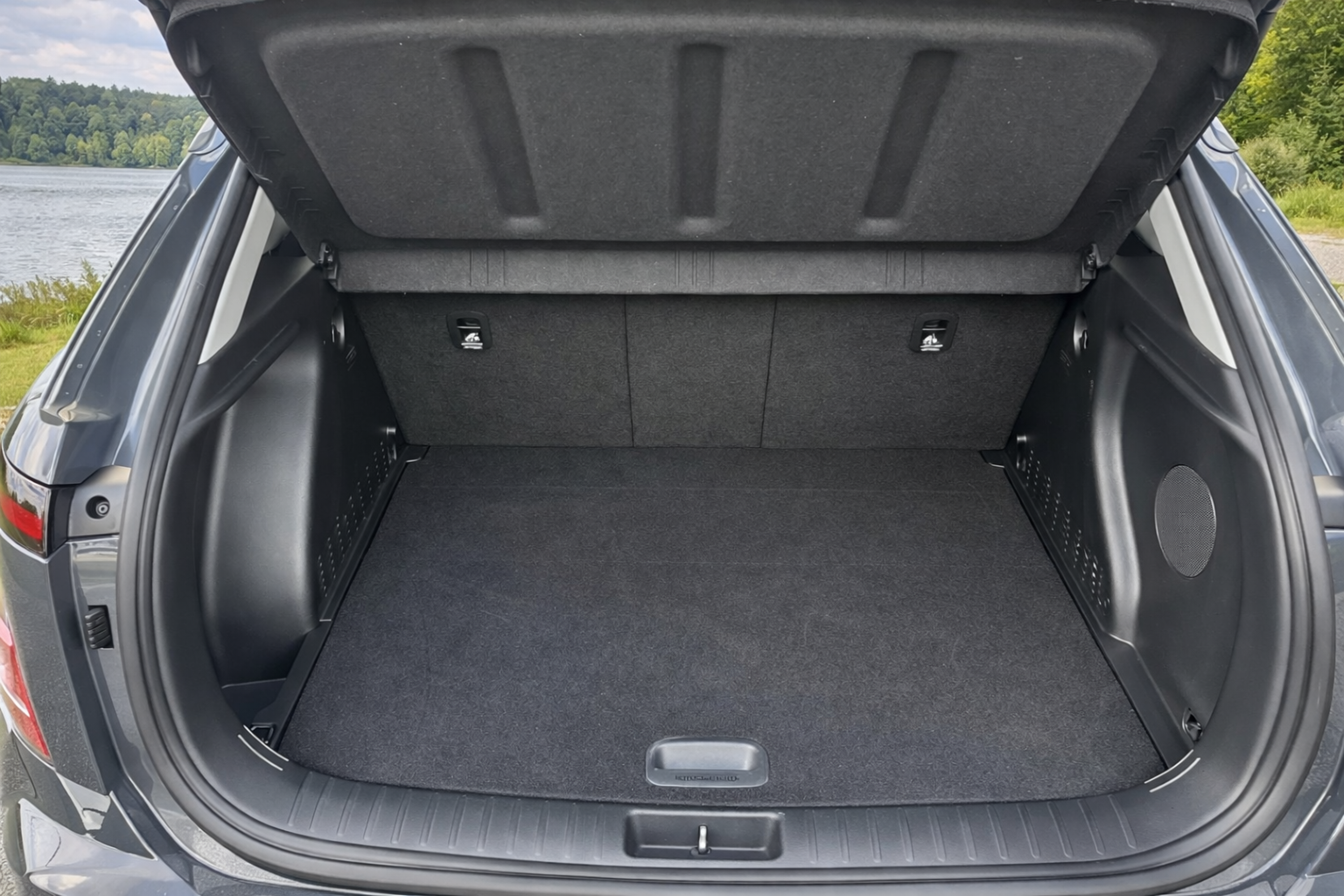
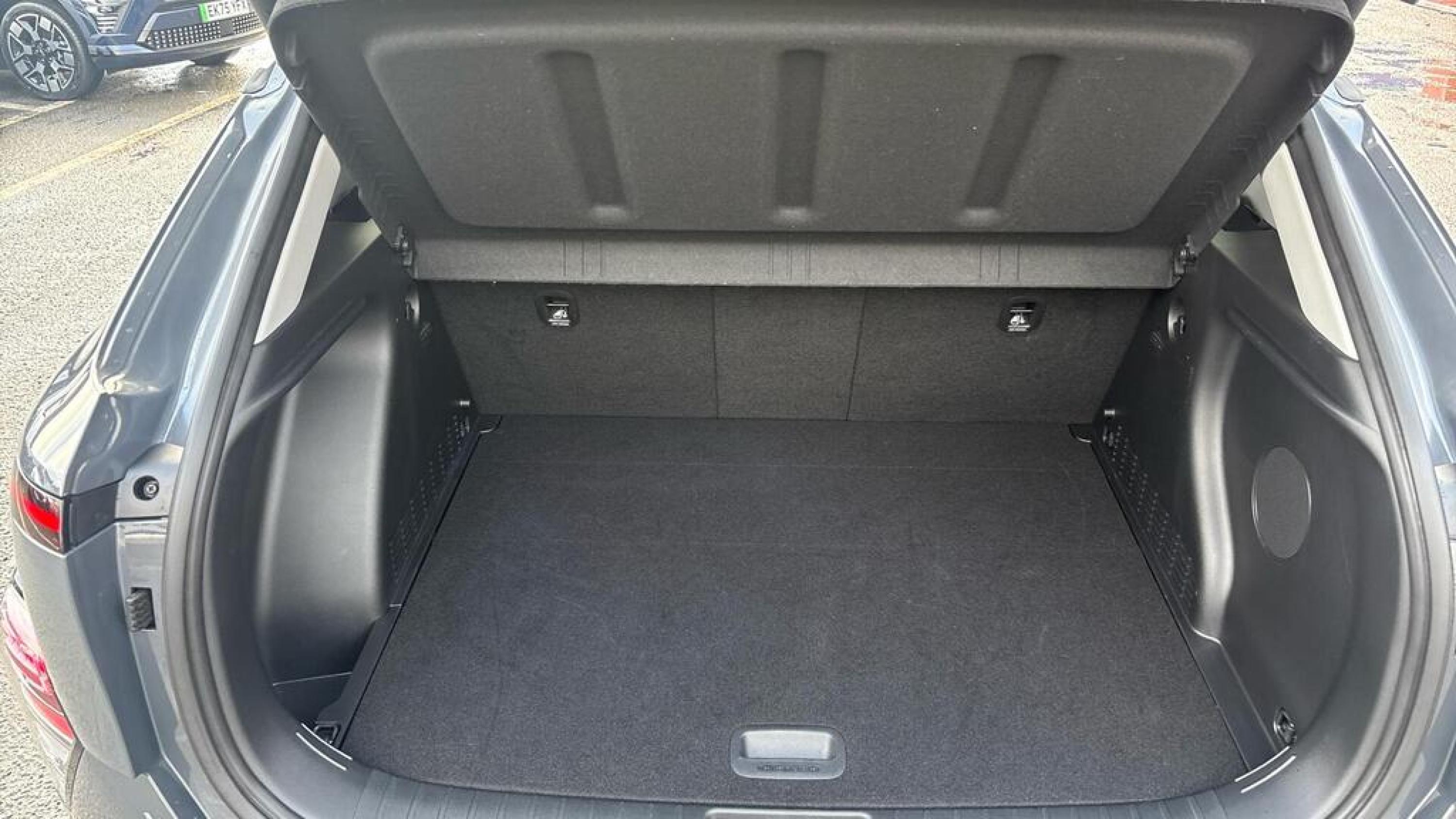
Boot capacity is a strong point. With 466 litres available with the rear seats in place, the Kona Electric comfortably handles everyday tasks such as shopping, luggage or a pushchair. Folding the rear seats expands capacity to around 1,300 litres, making the Kona capable of carrying bulkier loads when required.

Front seat space is generous, with good headroom and shoulder room. Rear accommodation is improved over the previous generation but remains best suited to children or adults on shorter journeys. Wide opening doors and accessible Isofix points make fitting child seats straightforward.

The Kona Electric’s practicality feels honest rather than overstated. It doesn’t claim to be a large family SUV but it delivers enough flexibility for most households without the drawbacks of larger vehicles.

Safety & Reliability

Safety is a clear priority in the Kona Electric. Hyundai equips the car with a comprehensive suite of driver assistance systems that operate smoothly and predictably. These systems support the driver without feeling intrusive, contributing to a relaxed driving experience.

The vehicle’s structure feels solid and confidence inspiring and the low battery placement enhances stability in emergency manoeuvres. Visibility is good and the Kona Electric feels composed even in challenging conditions.

Reliability expectations are strong. The Kona Electric is built on a proven platform and Hyundai’s track record for durability adds reassurance. Software updates continue to refine features and functionality, helping the car remain current over time.

For buyers new to electric vehicles, the Kona Electric offers a reassuring blend of safety, reliability and support.

Final Thoughts

The Hyundai Kona Electric succeeds by focusing on the things that matter most over time: comfort, predictability and ease of ownership. It doesn’t chase novelty or excitement but instead delivers an electric driving experience that feels settled and dependable.

The second generation model improves on its predecessor in meaningful ways, offering more space, better refinement and improved technology while retaining the Kona’s core strengths. It may not excite in the way some newer EVs do but it earns confidence and keeps it.

For drivers who want an electric SUV that integrates seamlessly into everyday life, the Kona Electric remains a quietly compelling and sensible choice.

Select a model below for full specifications.

Title Order Engine Power Order 0-60 Order Electric Range Order Price New Order Battery Capacity Order
160kW N Line 65kWh 5dr Auto 214 bhp 7.6 s 282 Miles £37,000 65.4 kWh
160kW N Line S 65kWh 5dr Auto 214 bhp 7.6 s 282 Miles £39,400 65.4 kWh
160kW N Line S 65kWh 5dr Auto [Lux Pack] 214 bhp 7.6 s 282 Miles £41,540 65.4 kWh
160kW Ultimate 65kWh 5dr Auto 214 bhp 7.6 s 282 Miles £39,400 65.4 kWh
160kW Ultimate 65kWh 5dr Auto [Leather] 214 bhp 7.6 s 282 Miles £40,290 65.4 kWh
160kW Ultimate 65kWh 5dr Auto [Lux Pack/Leather] 214 bhp 7.6 s 282 Miles £41,890 65.4 kWh
160kW Ultimate 65kWh 5dr Auto [Lux Pack] 214 bhp 7.6 s 282 Miles £40,990 65.4 kWh
160kW Advance 65kWh 5dr Auto 214 bhp 7.6 s 319 Miles £35,000 65.4 kWh
160kW Advance 65kWh 5dr Auto [Comfort Pack] 214 bhp 7.6 s 319 Miles £35,600 65.4 kWh

Help other car buyers by reviewing your car

Help fellow drivers make informed decisions by sharing your ownership experience. Tell us how your car performs in the real world - what you love, what you don't, and whether it's worth the money.

Login

Vehicle Information Disclaimer

Vehicle specifications, pricing information and technical data shown on this page are provided for general informational purposes only. Specifications, features and prices may change over time and may vary by market, model year, trim level or optional equipment. Electric vehicle range figures and fuel economy estimates may be based on manufacturer data or standardised testing procedures and may differ from real-world results. While www.vehiclecarcheckreviews.com makes reasonable efforts to ensure information is accurate, Adverglow Ltd does not guarantee the completeness or accuracy of vehicle data. Users should verify all vehicle specifications and pricing directly with manufacturers or authorised dealers before making purchasing decisions.

×