


Back to Search Results

NISSAN, Ariya (Latest Model)

Rating 4

4

At a Glance

Price New
£35,000 - £59,025
Insurance Group
30 - 42
Fuel Type
Electric
Range
247 Miles - 330 Miles
Engine Power
213 bhp - 428 bhp
Number of Doors
5
Recommended Trim Level
87 kWh Evolve+ (FWD) — best mix of range, comfort and value

Why it's great

Pro
Exceptionally refined and calming driving experience that makes every journey feel easy
Pro
Strong interior quality and grown up cabin design without gimmicks
Pro
Reliable real-world range that doesn’t fluctuate wildly with weather

What could be better

Con
Boot and rear space fall behind some similarly priced EV SUVs
Con
Charging speeds are good but now beaten by newer platforms
Con
High spec models creep into premium SUV pricing territory

The Nissan Ariya represents a significant moment for Nissan, not because it’s their first electric car but because it’s the first that truly redefines what a Nissan EV can be. When it arrived in 2022, the Ariya wasn’t trying to repeat the Leaf’s mass market success. Instead, it aimed higher, positioning itself as a more refined, more considered electric SUV designed to compete in a crowded and increasingly sophisticated segment.

This is Nissan stepping into a space occupied by cars like the Volkswagen ID.4, Škoda Enyaq and Audi Q4 e-tron. It’s a move away from utilitarian EV thinking and toward something more emotionally appealing, without losing Nissan’s trademark focus on ease of use.

What sets the Ariya apart immediately is its tone. It doesn’t feel hurried or experimental. Instead, it feels deliberate, a car designed to feel calm, reassuring and cohesive rather than impressive in isolated bursts. The Ariya isn’t about making a loud first impression. It’s about creating a sense of quiet confidence that grows over time.

Check Your Vehicle

Get a Complete Car History Check You Can Trust

We check more! Our reports contain over 85 data points so you get complete peace of mind.

Enter your vehicle registration number

UK

Prices, Engines & Trim Levels

The Nissan Ariya occupies the upper end of the mainstream electric SUV market, positioned above cars like the Kia Niro EV and Hyundai Kona Electric and closer to alternatives such as the Volkswagen ID.4, Škoda Enyaq and Audi Q4 e-tron. As of 2025, prices typically start at around £44,000, with higher-spec and performance-oriented versions pushing beyond £56,000.

The Ariya range is built around two battery sizes: 63kWh and 87kWh, paired with either front-wheel drive or Nissan’s e-4ORCE all-wheel-drive system. This flexibility allows the Ariya to cater to a wide range of buyers, from those prioritising everyday efficiency to those wanting enhanced traction and performance.

The 63kWh versions serve as the entry point, offering smooth performance and a refined driving experience, though they are best suited to shorter commutes and mixed driving rather than frequent long distance travel. The 87kWh variants are where the Ariya feels most complete, delivering stronger motorway range and a more relaxed long distance character.

Trim levels include Engage, Advance, Evolve and Evolve+. Even the Engage trim comes generously equipped, featuring dual digital displays, adaptive cruise control, navigation and a comprehensive suite of safety systems. Advance trims introduce additional comfort features such as powered seats and upgraded materials, while Evolve and Evolve+ bring premium touches including a panoramic glass roof, higher end audio and more advanced driver assistance technology.

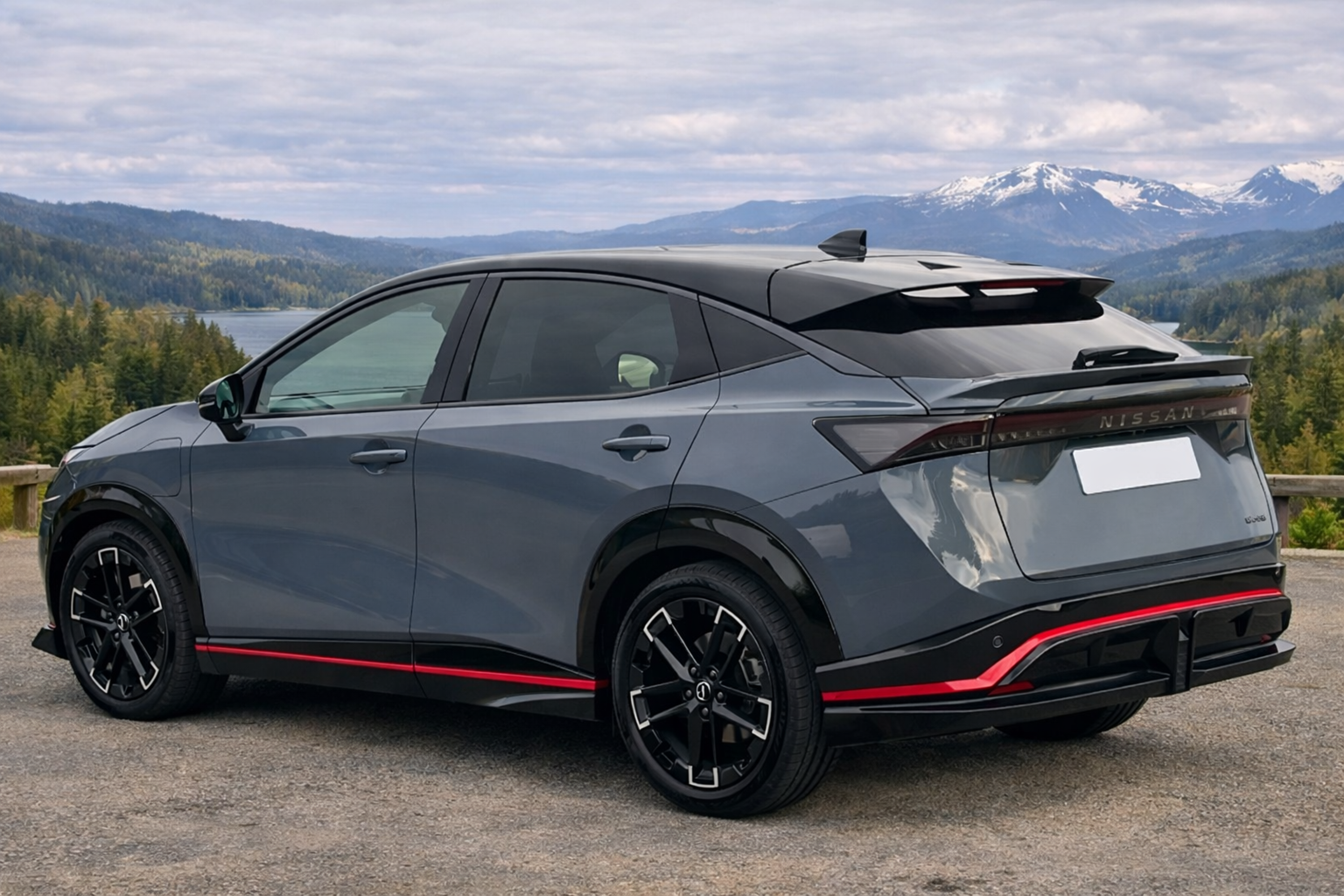
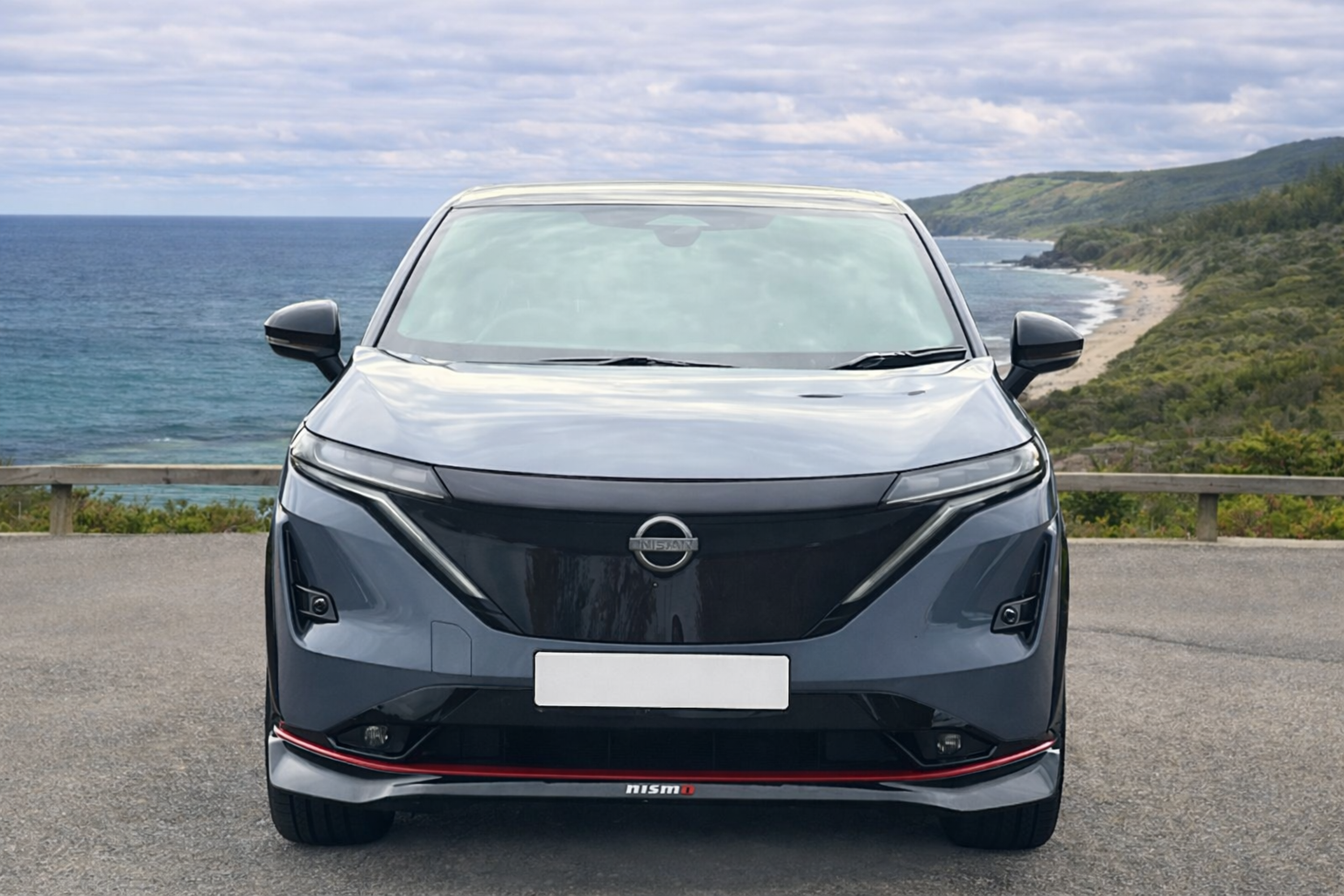
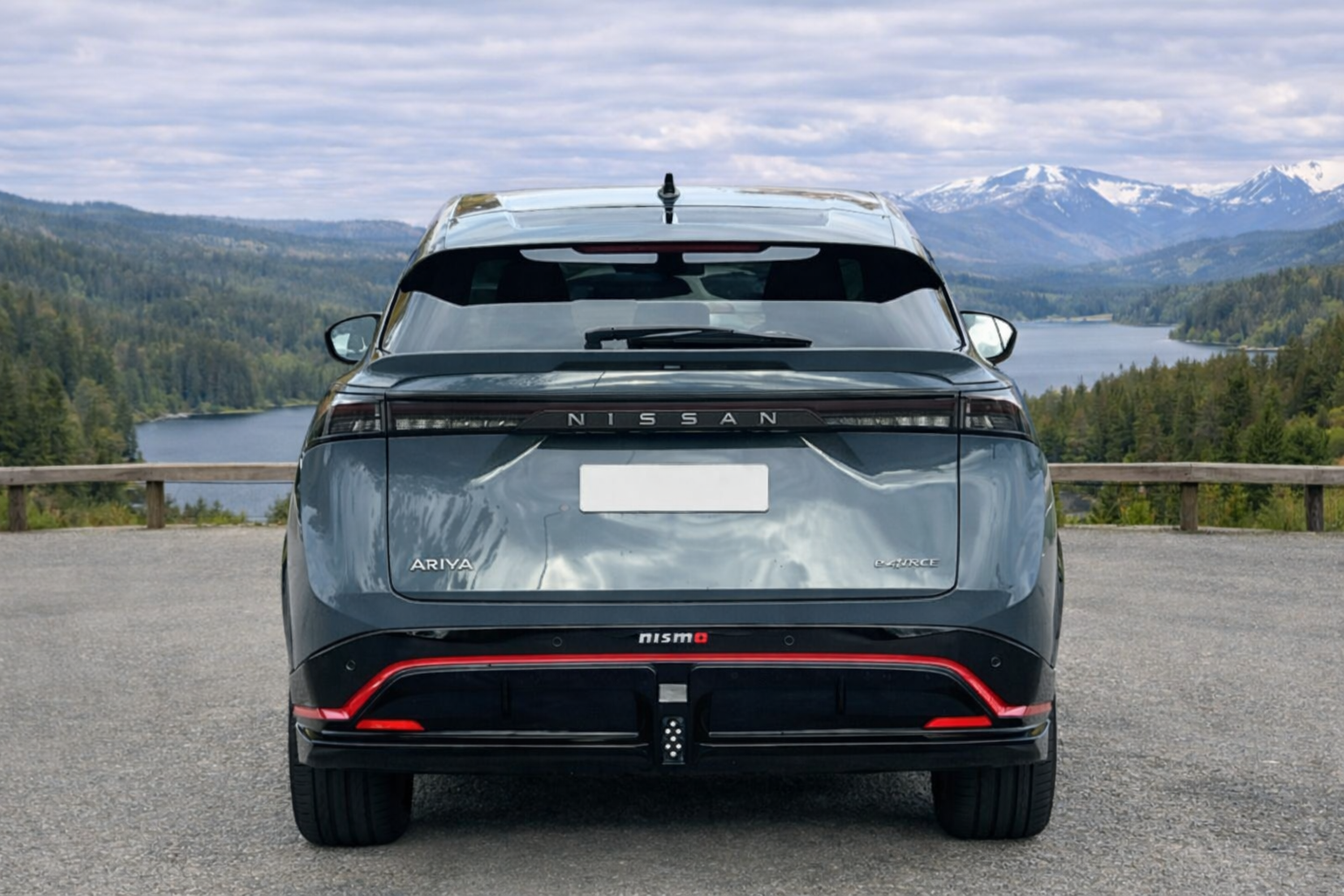
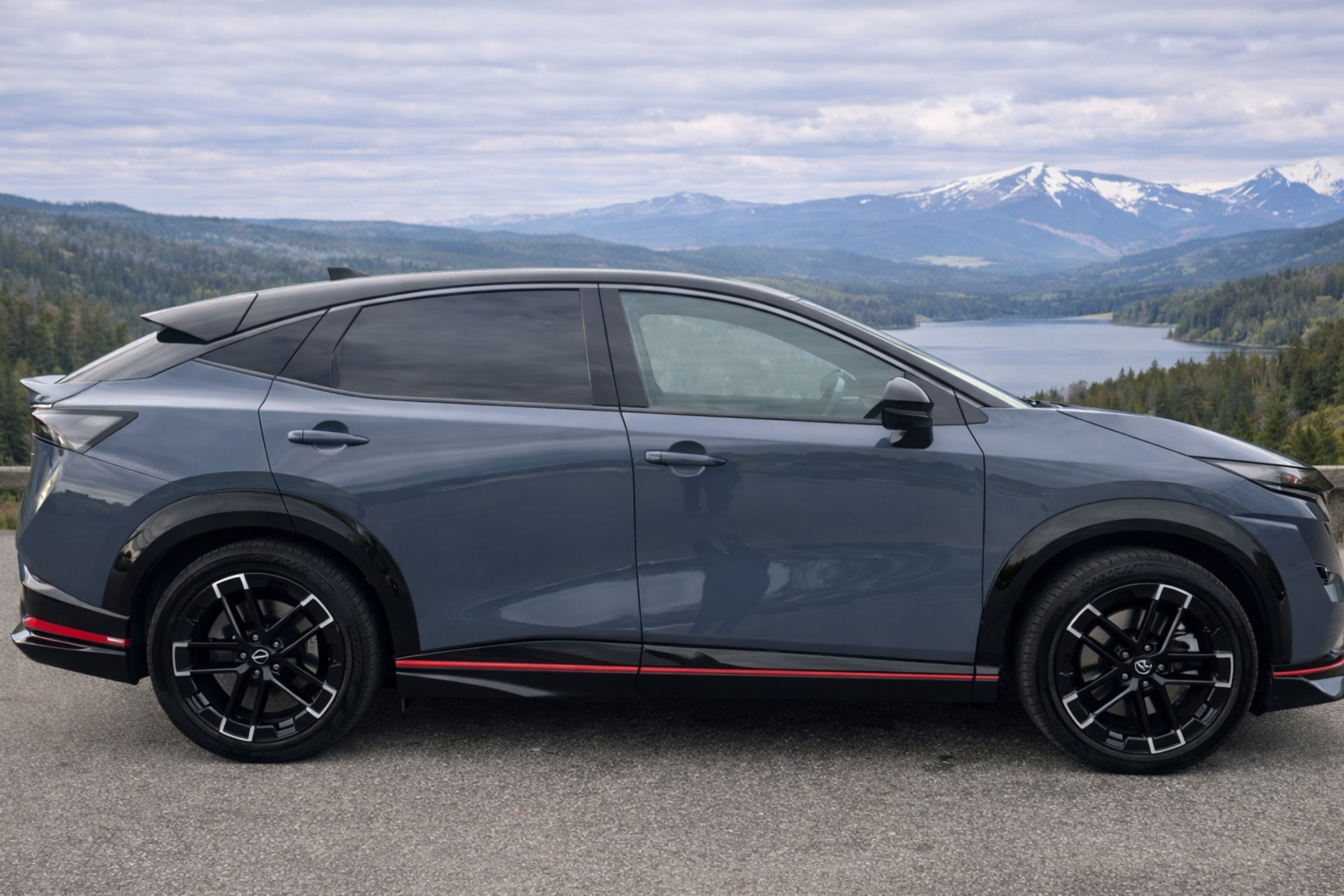
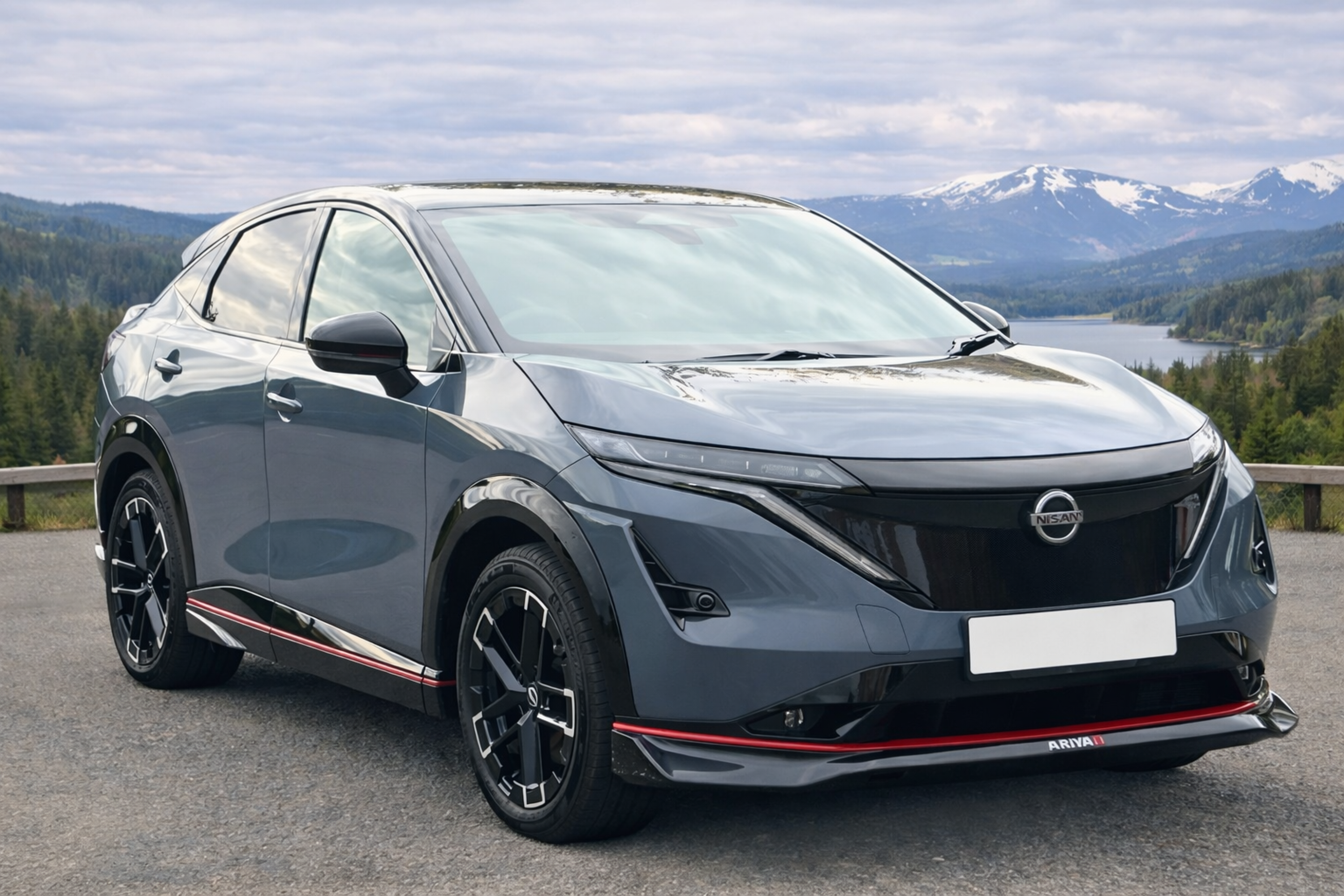
At the top of the range sits the Ariya NISMO, introduced in 2024. This version takes the Ariya in a more performance focused direction, combining the 87kWh battery with a more powerful dual-motor setup and bespoke chassis tuning. Power delivery is sharpened, suspension is firmer and steering responses are recalibrated to offer a more engaging drive. Visual changes include sportier styling details and unique interior finishes. While it doesn’t transform the Ariya into a full performance SUV in the mould of a Mustang Mach-E GT, it offers a noticeably more dynamic flavour for buyers who want extra edge without sacrificing refinement.

Interior

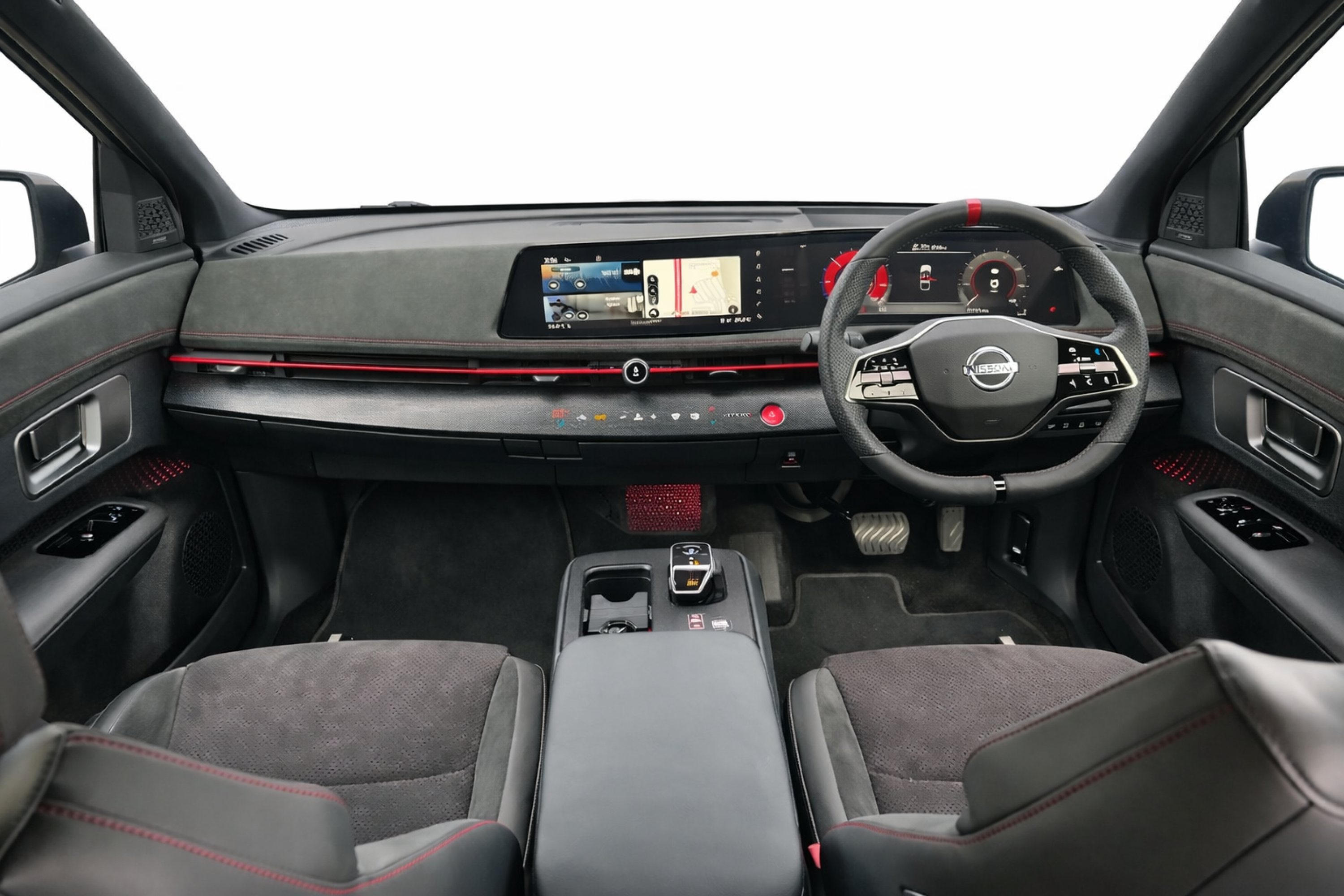
The Ariya’s cabin is one of Nissan’s best in years. Open the door and there is an immediate sense that this is a properly considered interior rather than an old design retrofitted with EV parts. The dashboard uses soft-touch surfaces in the right places and the overall layout is clean, with horizontal lines that emphasise width and give the space an airy feel. The seats are well padded and shaped for longer journeys, offering enough lateral support without feeling tight.

You sit a little higher than in a traditional hatchback but not perched as in some taller SUVs. The result is a driving position that many people will feel at home with almost immediately. The steering wheel and seat adjustment make it easy to fine-tune your position whether you are tall or short. Visibility out the front is good, helped by slim A-pillars, while the rear view relies more heavily on the camera system, as is now common in this class.

Technology blends into that environment rather than dominating it. There are twin digital screens facing the driver: one for the instruments and one for infotainment. The graphics are clear and there is a welcome lack of lag when moving through menus. Crucially, Nissan has resisted the urge to bury everything in touch sub-menus. Core climate functions live on a neat strip of haptic “buttons” integrated into the panel and there are still physical controls for volume and drive selection. It is not fully old school, but it does not ask you to relearn how to operate the basics.

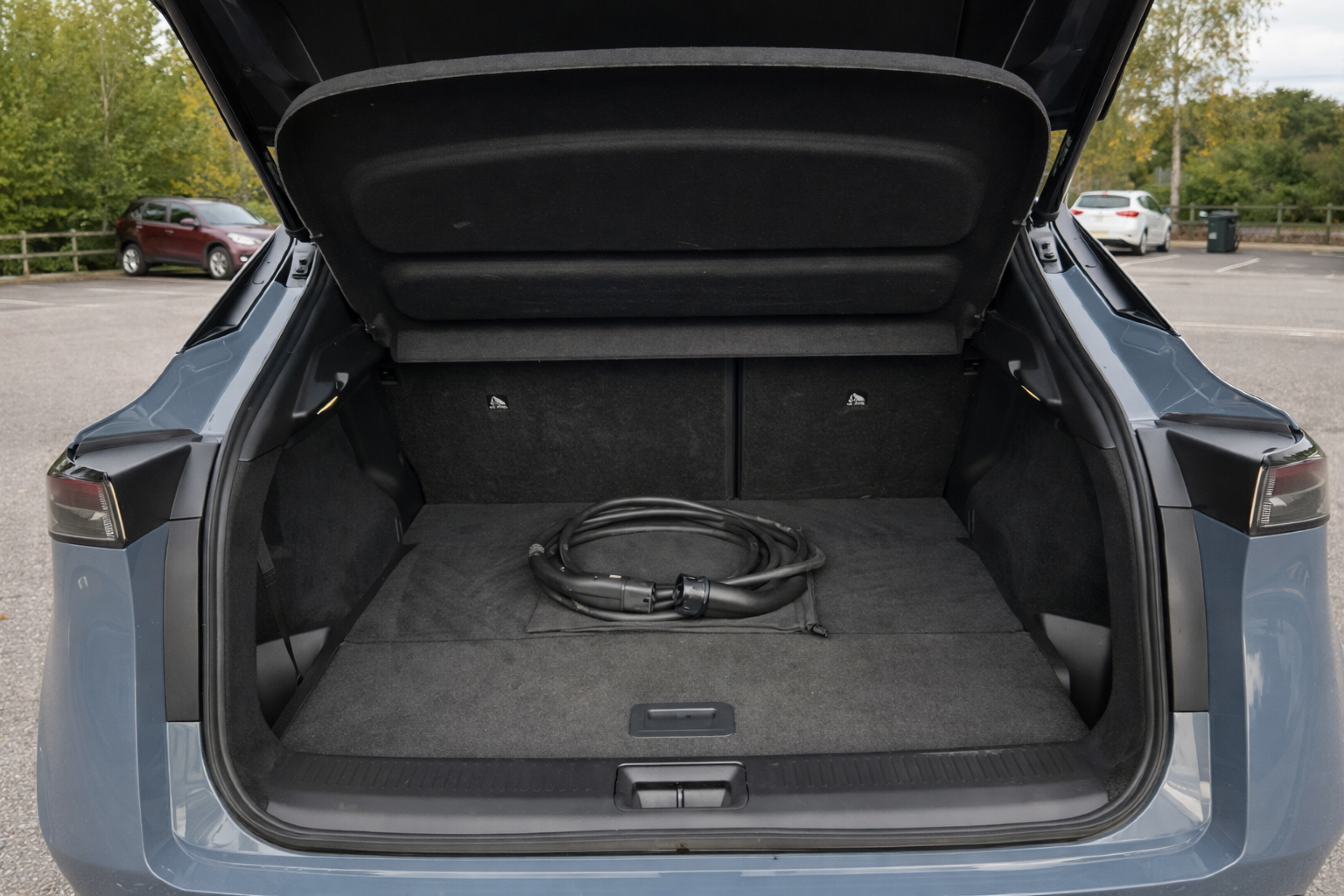
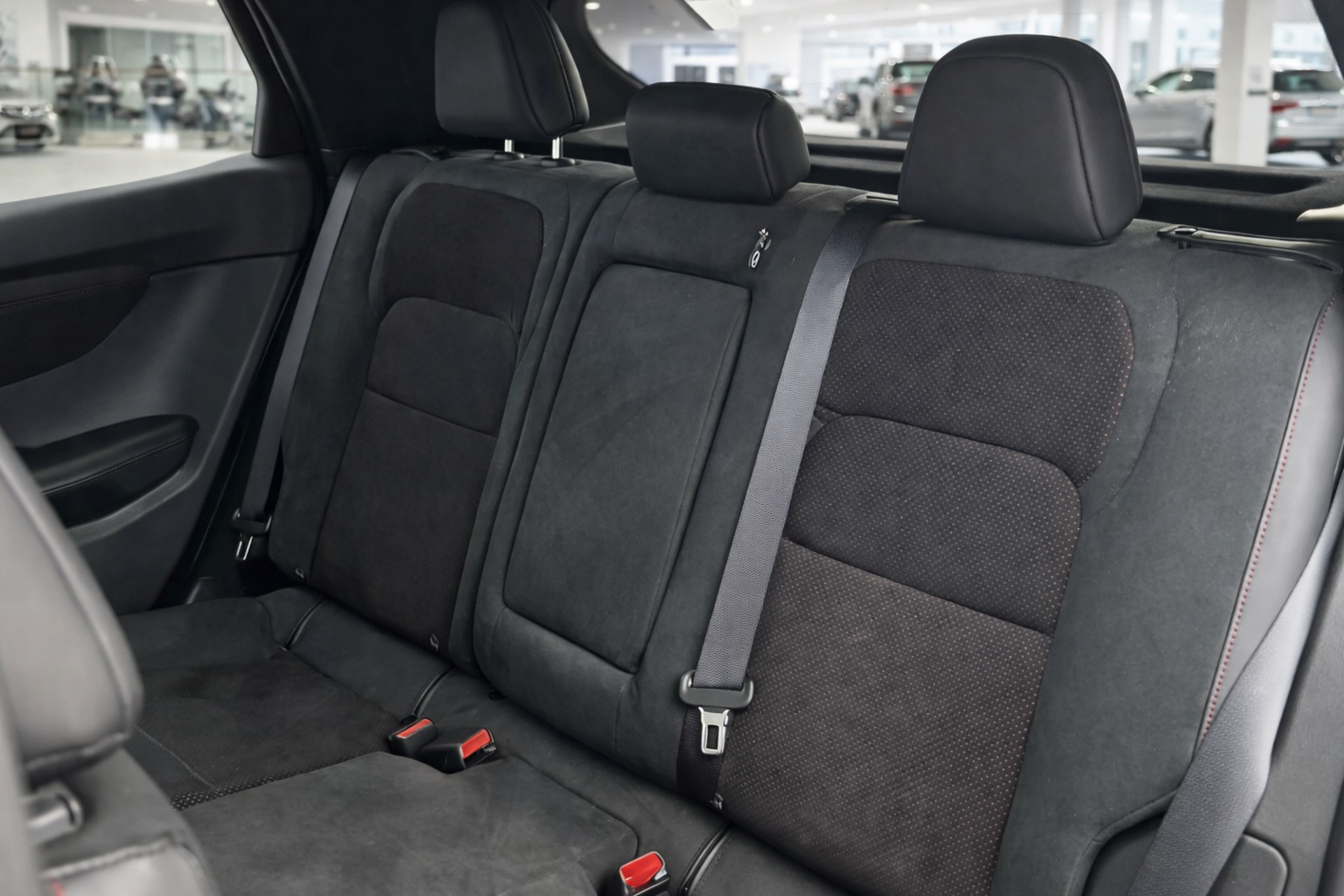
Space in the front is generous and the flat floor, enabled by the battery placement, helps rear passengers stretch out a bit more easily. Two adults in the back will be fine even on longer trips; three is workable for shorter journeys. The sloping roofline means particularly tall rear occupants might brush the headlining but for the majority of people and for children it works well. The boot, depending on version, offers a little over 400 litres of space with seats up and more than 1,300 litres with them folded, which is enough for holiday luggage, DIY store runs and the mixture of sports kit, prams and shopping that family life brings.

Driving Experience

On the road, the Ariya’s overriding impression is one of calm. This is not an EV that rushes to show you how quick it is every time you touch the accelerator. Instead, it delivers its power in a smooth, linear way that feels more like a well sorted conventional car that just happens to be very quiet. The 87 kWh front-wheel-drive version has enough performance for confident overtakes and brisk slip-road merges, but it never feels jumpy or aggressive.

Ride comfort is one of its strongest suits. Nissan has tuned the suspension to keep body movements tidy without resorting to stiffness. On British roads littered with patched tarmac and lazy pothole repairs, the Ariya tends to glide more than crash, even on larger wheels. There is still weight there – this is an EV with a big battery – but the chassis does a good job of keeping it under control.

Steering is light but consistent, which suits the car’s character. You do not get the sharp, playful feeling of something like a smaller hatchback-based EV but the Ariya is accurate enough that you place it on the road with confidence. Through bends, it leans a little but never in a way that unsettles passengers. It encourages a smooth, flowing driving style rather than frantic bursts of speed.

Noise levels are impressively low. Wind noise is well suppressed and road roar is kept in check unless you are on particularly coarse surfaces. Combined with the natural quiet of an electric drivetrain, that makes the Ariya a very relaxing motorway companion. Long journeys pass by with little fatigue and the car does a good job of insulating occupants from the outside world.

Overall, it is not a car that wants to be hustled for fun in the way some smaller, sportier EVs do. Instead, it rewards the kind of measured, progressive driving that real-world traffic tends to demand. For many drivers, that is a better fit.

Running Costs

Running costs are central to the Ariya’s appeal. With the larger battery, real-world ranges of around 230 to 260 miles are achievable without having to drive like a marathon eco-warrior. Even the 63 kWh version can deliver respectable numbers in the 200 to 230 mile band in mixed conditions, making it perfectly usable for typical daily routines.

When it comes to charging, the Ariya is competitive but no longer cutting edge. Maximum DC rapid-charging power is around 130 kW, which in ideal circumstances allows a 20 to 80 percent top-up in roughly 35 to 40 minutes. That is perfectly fine for a coffee break on a longer journey but not class-leading compared with the very latest 800-volt systems. On AC at home, with a typical 7 kW wall box, a full overnight charge from low battery to full is easily achieved and that is where most owners will see the real benefit: the convenience of waking every morning to an effectively full “tank”.

Electricity costs depend heavily on tariffs but even with conservative estimates, the Ariya’s running costs per mile come in significantly below those of a comparable petrol or diesel SUV. Factor in the usual EV advantages - reduced servicing needs thanks to fewer moving parts, no exhaust system, no oil changes – and the long-term financial picture becomes more compelling still. The Ariya might not be the cheapest EV to buy outright in its class but it makes a solid case over a typical three-to-five-year ownership window.

Practicality & Size

The Nissan Ariya is firmly positioned as a family sized electric SUV, with dimensions that prioritise interior comfort over compact agility. Measuring approximately 4.6 metres in length, it sits squarely alongside rivals like the Volkswagen ID.4 and Škoda Enyaq, offering a similar road presence and interior footprint.

Boot capacity stands at 468 litres, which is competitive but not class leading. It comfortably accommodates everyday family needs such as shopping, luggage or a pushchair, though rivals like the Enyaq offer slightly more outright space. Folding the rear seats significantly expands load capacity, allowing the Ariya to handle larger or bulkier items without difficulty.

Rear passenger accommodation is one of the Ariya’s stronger attributes. Thanks to the long wheelbase and flat floor, legroom is generous, making it well suited to families with older children or regular adult passengers. Headroom is also good, helped by the Ariya’s tall roofline and clever seat positioning.

Wide opening doors improve access, while the low load lip makes loading heavier items easier than in some competitors. Isofix points are easy to reach and the rear bench is wide enough to accommodate child seats without awkward compromises.

While the Ariya doesn’t chase maximum boot figures, its overall packaging feels well balanced. It prioritises passenger comfort and usability over headline numbers, which aligns well with its relaxed, long distance character.

Safety & Reliability

Safety is central to the Ariya’s design philosophy and it shows in both the technology and the way the car behaves on the road. Nissan equips the Ariya with a comprehensive suite of driver assistance systems, including adaptive cruise control, lane-keeping assistance, blind-spot monitoring and collision avoidance technology.

These systems are tuned to operate smoothly and progressively, avoiding the abrupt interventions that can undermine confidence. On motorways, adaptive cruise control works particularly well, reducing fatigue on longer journeys and reinforcing the Ariya’s calm, composed nature.

Structurally, the Ariya feels solid and reassuring. Battery placement contributes to a low centre of gravity, improving stability during sudden manoeuvres and enhancing overall road holding. Visibility is good for a vehicle of this size and the driving aids complement rather than compensate for the car’s natural balance.

In terms of reliability, the Ariya benefits from Nissan’s long standing experience with electric vehicles. While it is a more complex and upmarket product than the Leaf, the underlying platform feels mature and well engineered. Software updates allow ongoing refinement and Nissan’s established dealer network provides reassurance for long term ownership.

Overall, the Ariya inspires confidence not through gimmicks but through consistency and predictability, qualities that matter most over time.

Final Thoughts

The Nissan Ariya is not the loudest entrant in the electric SUV world and that is exactly why it deserves attention. It takes the core strengths of electric drive — quietness, smooth torque, low running costs — and wraps them in a package that feels familiar, comfortable and very easy to live with. It does not chase ultimate range or performance figures and it does not try to dazzle with tech for the sake of it. Instead, it aims to be the electric SUV that simply works, day in and day out.

If you want an EV that will wow you every time you look at the spec sheet, there are flashier options. But if you want something that will quietly make every journey calmer, every commute easier and every fuel stop cheaper, the Ariya is one of the best balanced, most grown-up choices currently on sale. It is the electric SUV for people who do not want an electric lifestyle statement, they just want a really good car that happens to run on electricity.

Select a model below for full specifications.

Title Order Engine Power Order 0-60 Order Electric Range Order Price New Order Battery Capacity Order
160kW EvoLve 63kWh 22kWCh 5dr Auto 213 bhp 7.3 s 247 Miles £44,895 63 kWh
160kW EvoLve 63kWh 22kWCh 5dr Auto [Nappa Leather] 213 bhp 7.3 s 247 Miles £49,330 63 kWh
160kW EvoLve 63kWh 22kWCh 5dr Auto [Sport Pack] 213 bhp 7.3 s 247 Miles £46,890 63 kWh
160kW EvoLve 63kWh 5dr Auto 213 bhp 7.3 s 247 Miles £44,000 63 kWh
160kW EvoLve 63kWh 5dr Auto [Nappa Leather] 213 bhp 7.3 s 247 Miles £45,295 63 kWh
160kW EvoLve 63kWh 5dr Auto [Sport Pack] 213 bhp 7.3 s 247 Miles £45,995 63 kWh
160kW Advance 63kWh 22kWCh 5dr Auto [Sky Pack] 213 bhp 7.3 s 250 Miles £41,190 63 kWh
160kW Advance 63kWh 22kWCh 5dr Auto 213 bhp 7.3 s 250 Miles £39,895 63 kWh
160kW Advance 63kWh 5dr Auto 213 bhp 7.3 s 250 Miles £39,000 63 kWh
160kW Advance 63kWh 5dr Auto [Sky Pack] 213 bhp 7.3 s 250 Miles £40,295 63 kWh
160kW Engage 63kWh 5dr Auto 213 bhp 7.3 s 251 Miles £35,000 63 kWh
320kW Nismo 87kWh 22kWCh 5dr e-4ORCE Auto 428 bhp 4.9 s 261 Miles £56,630 87 kWh
290kW EvoLve+ 87kWh 22kWCh 5dr e-4ORCE Auto 388 bhp 4.9 s 310 Miles £59,025 87 kWh
225kW EvoLve 87kWh 22kWCh 5dr e-4ORCE Auto [Lthr] 301 bhp 5.5 s 314 Miles £51,795 87 kWh
225kW EvoLve 87kWh 22kWCh 5dr e-4ORCE Auto[SprtPk] 301 bhp 5.5 s 314 Miles £52,495 87 kWh
225kW Advance 87kWh 22kWCh 5dr e-4ORCE Auto 301 bhp 5.5 s 319 Miles £45,500 87 kWh
225kW Advance 87kWh 22kWCh 5dr e-4ORCE Auto [Sky] 301 bhp 5.5 s 319 Miles £46,795 87 kWh
178kW EvoLve 87kWh 22kWCh 5dr Auto 238 bhp 7.4 s 322 Miles £46,000 87 kWh
178kW EvoLve 87kWh 22kWCh 5dr Auto [Leather] 238 bhp 7.4 s 322 Miles £47,295 87 kWh
178kW EvoLve 87kWh 22kWCh 5dr Auto [Sport Pack] 238 bhp 7.4 s 322 Miles £47,995 87 kWh
178kW Advance 87kWh 22kWCh 5dr Auto 238 bhp 7.4 s 329 Miles £41,000 87 kWh
178kW Advance 87kWh 22kWCh 5dr Auto [Sky Pack] 238 bhp 7.4 s 329 Miles £42,295 87 kWh
178kW Engage 87kWh 22kWCh 5dr Auto 238 bhp 7.4 s 330 Miles £37,000 87 kWh

Help other car buyers by reviewing your car

Help fellow drivers make informed decisions by sharing your ownership experience. Tell us how your car performs in the real world - what you love, what you don't, and whether it's worth the money.

Login

Vehicle Information Disclaimer

Vehicle specifications, pricing information and technical data shown on this page are provided for general informational purposes only. Specifications, features and prices may change over time and may vary by market, model year, trim level or optional equipment. Electric vehicle range figures and fuel economy estimates may be based on manufacturer data or standardised testing procedures and may differ from real-world results. While www.vehiclecarcheckreviews.com makes reasonable efforts to ensure information is accurate, Adverglow Ltd does not guarantee the completeness or accuracy of vehicle data. Users should verify all vehicle specifications and pricing directly with manufacturers or authorised dealers before making purchasing decisions.

×